The experimental elementary particle physics groups using high-energy particle collision data to test how matter behaves at the smallest distance scales, searching for clues that will lead to a better understanding of the fundamental particles and the force between them. The primary focus of this group is the ATLAS experiment at the CERN LHC, where protons are collided at the highest energies yet obtained. The group is exploring the self-coupling of the Higgs boson (where the value is predicted in our current best theory, the Standard Model, but has not yet been measured) and for physics beyond the Standard Model, including new Higgs-like bosons, particles that might interact both with normal matter and dark matter, and neutral weakly-interacting particles that can travel several meters before decaying into visible particles. These searches make use of machine learning approaches for particle identification and signal/background discrimination. Group members take leadership positions in these searches. The group also makes significant contributions to the core software used to reconstruct ATLAS events, particularly through the work of Research Professor Peter Loch, a leading expert on reconstructing jets and missing transverse momentum, and research scientist Walter Lampl, a software expert.

In addition, the group has a long history of contributions to the design and construction of the ATLAS detector and its electronics. This is highlighted by the concept for, and partial construction of, the forward calorimeter. This calorimeter uses a novel design that has proven to be highly successful. We completed several large electronics projects for the Phase 1 upgrade of ATLAS, and for the Phase 2 (high-luminosity LHC) upgrade we have responsibilities for firmware for the Liquid Argon calorimeter readout electronics and for the track trigger, and for developing corrections to the forward calorimeter pulses that will be distorted due to the increased intensity. We have also begun exploring detector design for the next-generation accelerator, the FCC. Building upon our expertise in noble liquid calorimetry, we are leading the design effort for an endcap electromagnetic calorimeter for the e+e- collider phase of the FCC (called FCCee).
Experimental Particle Physics Faculty
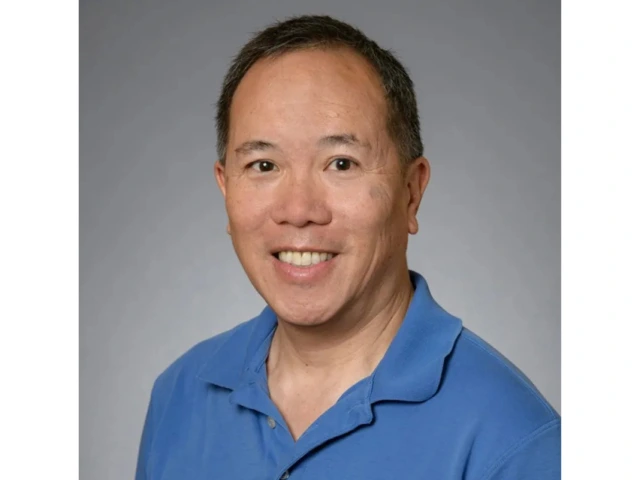
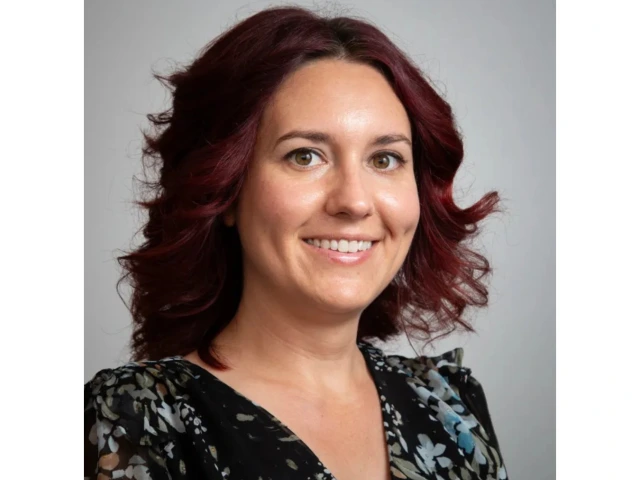
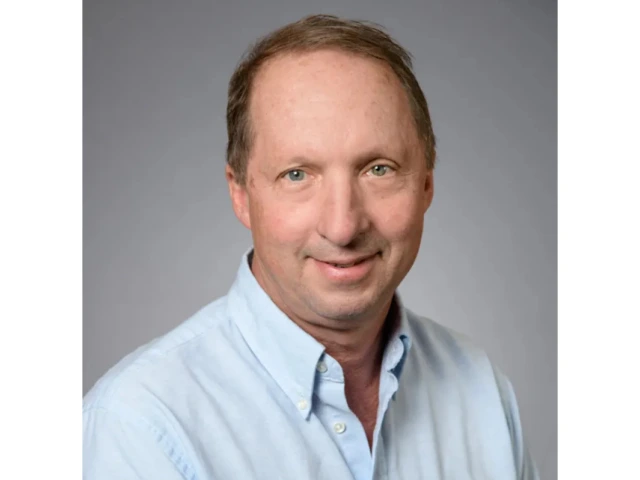
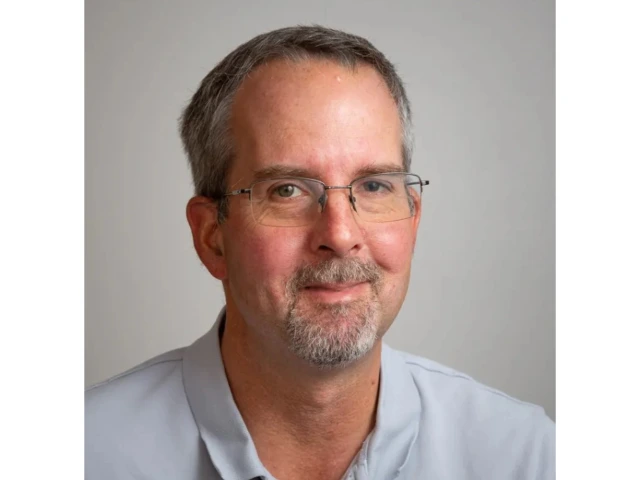
The Cheu group has led searches for supersymmetric partner particles and for particles that mediate between the dark matter and Standard Model sectors. A major component of Cheu’s work is the development of FPGA-assisted tracking triggers for the high-luminosity LHC, along with contributions to ATLAS calorimeter firmware. Cheu’s scientific leadership and impact have been recognized with appointment as a University of Arizona Distinguished Professor.
The Hyneman group focuses on experimental studies of the Higgs sector, with particular emphasis on measuring the Higgs self-coupling through searches for diHiggs production in the 4b decay mode. In support of these efforts, Hyneman has played a leadership role in developing advanced techniques for identifying massive particles that decay to c or b quark pairs and has served as a convener for these activities within ATLAS. Hyneman is currently a member of the ATLAS Early Career Scientist Board and has contributed to community leadership through organizing major collaboration workshops, including serving as lead organizer for the 2026 US ATLAS Summer Workshop to be held at UA.
The Johns group research spans precision measurements and searches for new phenomena. Johns made key contributions to the first observation of 4-top-quark production and is currently leading searches for “long-lived particles” that travel several meters before decaying. The Johns group also plays a leading role in large-scale electronics and firmware development for the ATLAS calorimeter, muon, and trigger systems, providing essential infrastructure for current and future LHC operations. Johns’ contributions have been recognized with appointment as a University of Arizona Distinguished Professor.
The Rutherfoord group has played a foundational role in the ATLAS experiment through leadership in detector design, construction, and long-term operations. Rutherfoord led the design and construction of the ATLAS forward calorimeter and continues to support its performance through the development of correction techniques required for the high-intensity environment of future LHC runs. In addition to technical leadership, he has served as Chair of the US ATLAS Institutional Board, contributing to governance at the national level. His career achievements have been recognized with the US ATLAS Lifetime Achievement Award and appointment as a UA Regents Professor.
The Varnes group conducts experimental searches for new particles, including vector-like quarks and heavy Higgs-like bosons. The group also contributes to detector and trigger development, particularly FPGA-assisted track triggers for the high-luminosity LHC. Varnes has provided extensive service to the ATLAS collaboration, including serving as Chair of the ATLAS Speakers Committee and the Speakers Committee Advisory Board, which oversee conference representation and policy. In addition, he leads the design of an endcap electromagnetic calorimeter for a proposed experiment at the Future Circular Collider, extending the group’s impact to next-generation facilities.