Donald Ray Huffman (1935 – 2025)
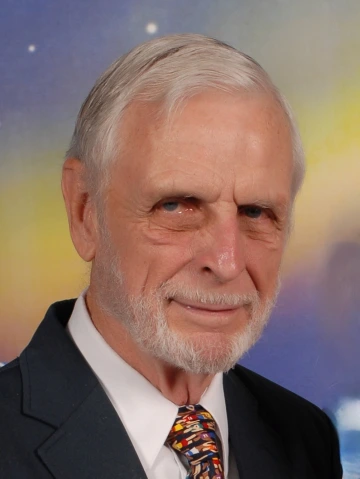
We write this to announce the passing of yet another beloved Emeritus Professor of Physics, Donald R. Huffman, on November 2, in Denver, Colorado. He had been suffering from dementia and had also contracted Covid 19 prior to that. He is preceded in death by his wife Peggy, who passed away in February 2025, and two of his children, who had passed earlier. He had continued to live in Tucson until February 2025, and as mentioned below, continued to visit his laboratory in the PAS building post-retirement for many years.
Don received his B. S. in Physics from Texas A&M University in 1957, M. A. in Physics from Rice University in 1959, and Ph. D. from the University of California, Riverside in 1966. He was an NSF Postdoctoral Fellow at the University of Frankfurt, Germany, in 1967. He started at the University of Arizona as an Assistant Professor of Physics in 1968 and quickly rose through the ranks to become Full Professor of Physics in 1975. He was appointed Director of Arizona Fullerene Consortium in 1991, and Regents Professor of Physics in 1992. He retired in 2000 and was subsequently Emeritus Regents Professor of Physics. Don was an internationally renowned experimental physicist, who was also an old-fashioned humble scholar, a considerate and kind teacher, and a good friend to many until the end.
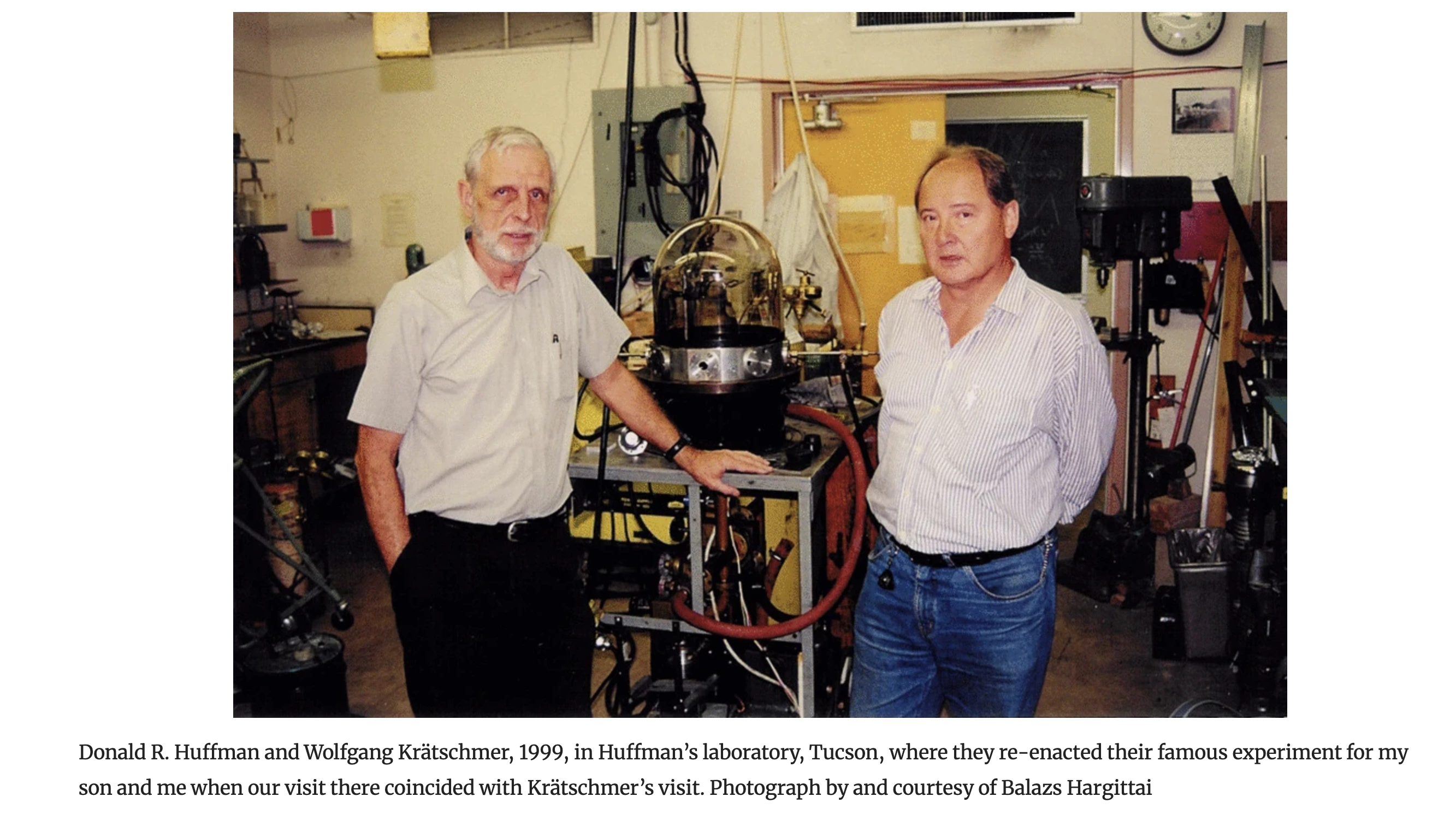
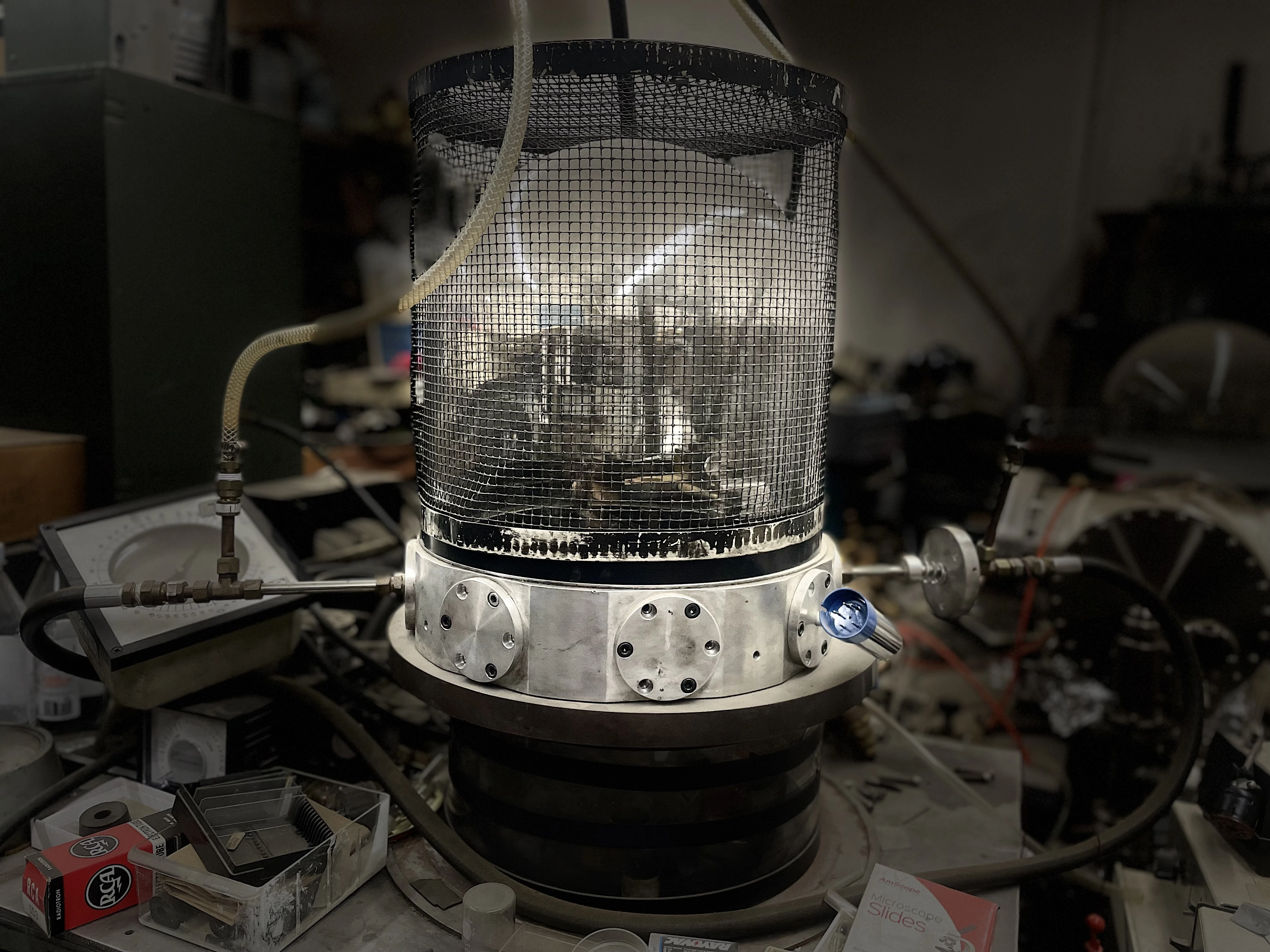
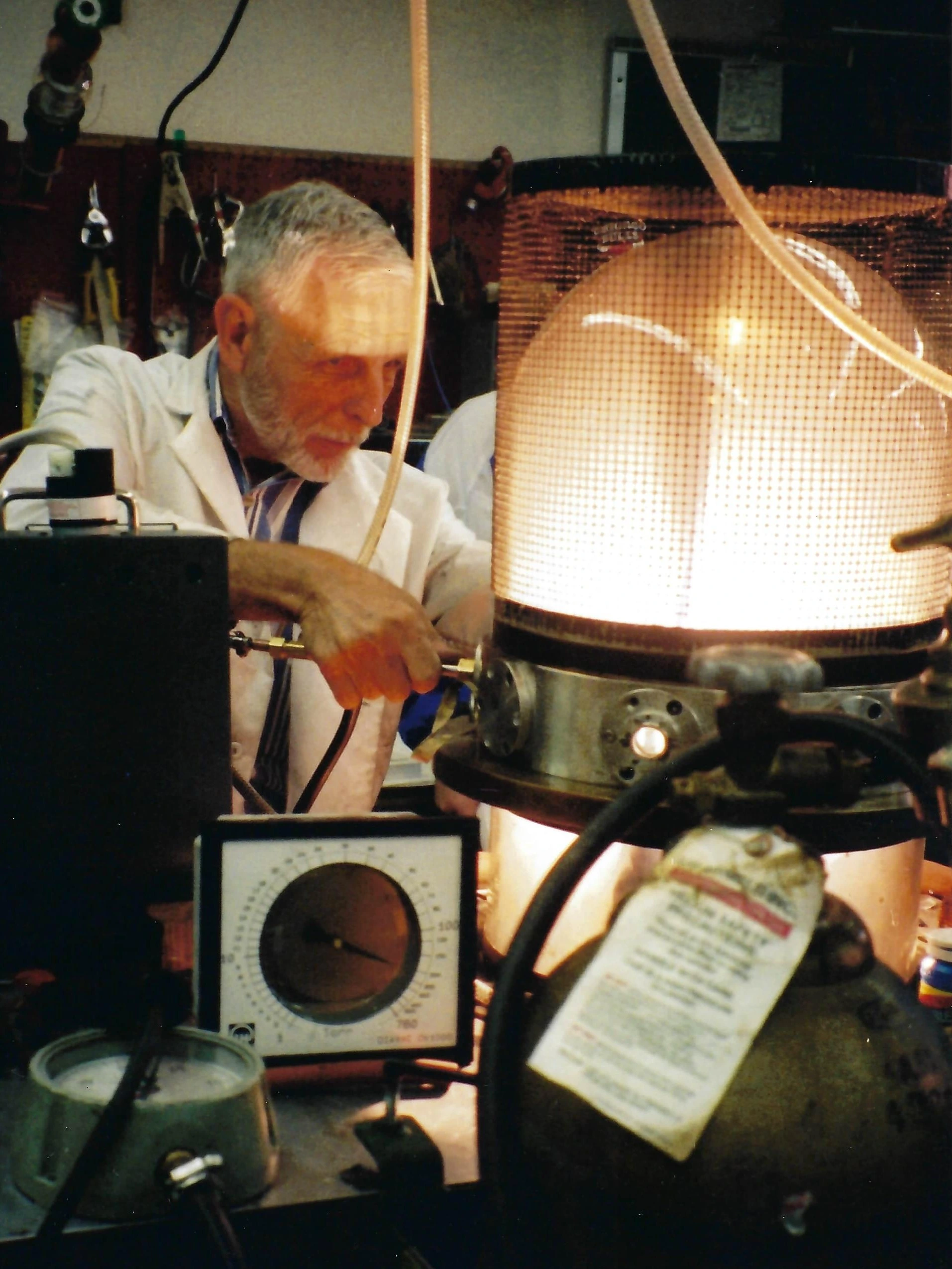
Donald Huffman was an astrophysicist by training who made one of the most important discoveries in materials physics and chemistry: together with Wolfgang Krätschmer at the Max Planck Institute for Nuclear Physics at Heidelberg and their graduate students Lowell Lamb and Kostas Fostiropoulos he discovered the technique to produce C60 Buckminsterfullerene (more commonly known as buckyball) in quantities that could be then studied experimentally using standard spectroscopic techniques. This was a little after 1985 when Harold Kroto from the University of Sussex in England and the team of James Heath, Sean O'Brien, Robert Curl and Richard Smalley at Rice University had found from mass spectroscopy the evidence for previously unknown carbon allotropes beyond diamond and graphite, in sooty residues created by vaporizing carbon in helium atmosphere. The Sussex-Rice team surmised correctly that they had produced C60 and C70, but their particular approach generated very small amounts of the materials that were not suitable for spectroscopic confirmation of their structures. The topic continued to be of interest to a small number of specialists until 1989-90, when the Huffman-Krätschmer team discovered that buckyballs were present in soot generated by evaporation of carbon electrodes in helium atmosphere. Confirmation of the soccer-ball shape of C60 (and American football shape of C70) by UV, IR and NMR techniques quickly followed (the equipment used by Huffman and Lamb to produce C60 in bulk amounts still exists in his lab, see attached photo). The C60 work of the Huffman-Krätschmer team attracted wide attention immediately following its publication in Nature in 1990, as their approach to synthesize bulk amounts of buckyball could be replicated easily. International research on fullerenes began.
It is hard to communicate in 2025 the excitement that followed the Huffman-Krätschmer discovery. Fullerenes were soon widely studied as nonlinear optical materials, as electron-acceptors in organic solar cells, and as correlated-electron superconductors (K3C60). Discovery of carbon nanotubes followed, and while the exfoliate technique to create graphene and other layered materials would come later, the impetus for that research came from research on fullerenes. It is not an exaggeration to say that the Huffman-Krätschmer discovery was the beginning of what would be later called nanoscience.
It is important to point out that Don, trained as an astrophysicist, was not an accidental visitor to the world of materials science. His interest in fullerenes stemmed from his earlier work on carbon particles present in interstellar dust, that he had studied using light scattering techniques, which continued to be his lifetime hobby. Don may be known best in the light-scattering community for his monograph with Craig F. Bohren, ``Absorption and Scattering of Light by Small Particles'' (Wiley, 1983), which now is the standard reference in the field. Clearly written and with an excellent balance between theoretical and experiment topics, Bohren and Huffman offers a cohesive and profoundly useful description of light scattering. Still in print after more than forty years, this work has been cited more than thirty-six thousand times in the technical literature.
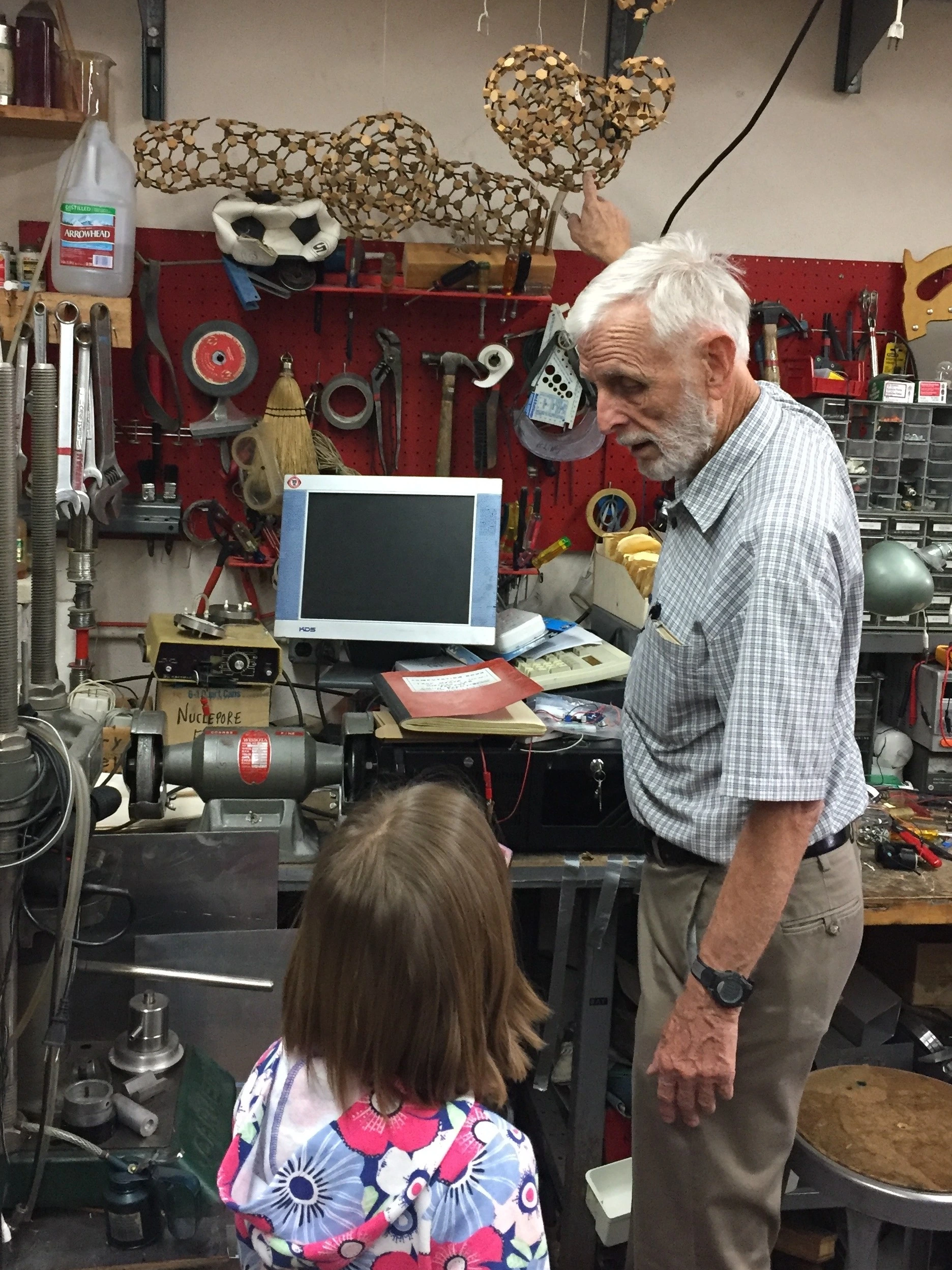
Don received the Materials Research Society's highest award (Gold Medal) in 1993 and the Hewlett-Packard Europhysics Prize in 1994 for his research on fullerenes. He continued to teach until he retired and was a popular instructor of the Advanced Lab course. He continued his research with a small number of mentees in his lab on the fifth floor of the south-wing. His scientific interests remained broad even in his old age. Before Don was disabled by dementia, he was working tirelessly to construct an iPhone-based handy monitor for measuring air-polluting dust-particles. He remained an avid long-distance runner into his seventies, when he ran his last marathon.
Don possessed every quality one would hope to find in a scientist. He was creative, well read, and had excellent taste in scientific problems. He was uncompromising in his dedication to getting it right and didn’t quit on a problem until he was certain about what he could, or could not, say about the results. This obituary would be incomplete if we do not mention the kindness with which he treated his younger colleagues. One summer, Don hired a chemistry major who had just graduated from a Liberal Arts college to work in his C60 lab. This young chemist was not still comfortable in a chemistry lab. She dropped and broke a few things in the lab. Don never got upset. He patiently met with her every week to review her notebook and progress. And when she splashed hot oil on her face, Don personally took her to urgent care and saw her through to safety. Today she is a chemistry professor and hopes to treat her students with the same kindness and integrity.
Don's colleagues will miss him.