



Condensed matter theory provides the framework for understanding emerging quantum technologies, such as the foundational advances in macroscopic quantum effects recognized by the 2025 Nobel Prize in Physics. Theoretical condensed-matter research in the physics department spans a broad range of areas, including strongly-correlated materials, quantum thermodynamics and statistical mechanics, magnetism, spintronics, and unconventional superconductors including ferromagnetic superconductors. One member of the group has branched into theory of quantum gravitation (Lebed). Specific topics under investigation include novel organic semiconductors with applications to organic photovoltaics; unconventional organic and high-temperature superconductors; the prediction of non-Fermi-liquid crossovers in quasi-one-dimensional conductors under strong magnetic fields; dynamics of driven quantum systems; and magnetic and spin-transport properties of nanomagnets.
The group has maintained strong collaborations with experimental condensed-matter physicists within the department in the area of magnetic tunnel junctions, including multiple joint NSF-funded projects. These results have led to a number of patents and pending patent applications. Group members also have extensive ongoing national and international collaborations with research groups outside the UA.
Theoretical Condensed Matter Physics Faculty
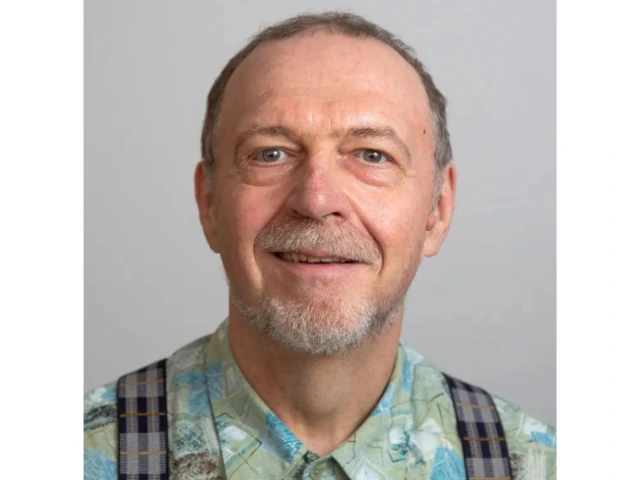
Lebed conducts theoretical research spanning condensed matter physics and quantum gravitation. In condensed matter physics, he focuses on unconventional superconductivity and non-Fermi liquid behavior in strongly correlated electron systems under magnetic fields, including quasi-one-dimensional organic superconductors, quasi-two-dimensional high-Tc superconductors, and low-dimensional ferromagnetic superconductors. Lebed introduced several foundational concepts to the field, including field-induced spin-density waves, “Lebed Magic Angles” and reentrant superconductivity. In quantum gravity, his recent works explores quantum violations of Einstein’s Equivalence Principle for composite systems. Lebed is an APS Fellow and has authored numerous highly cited publications, including multiple books on organic superconductivity and quantum gravity.
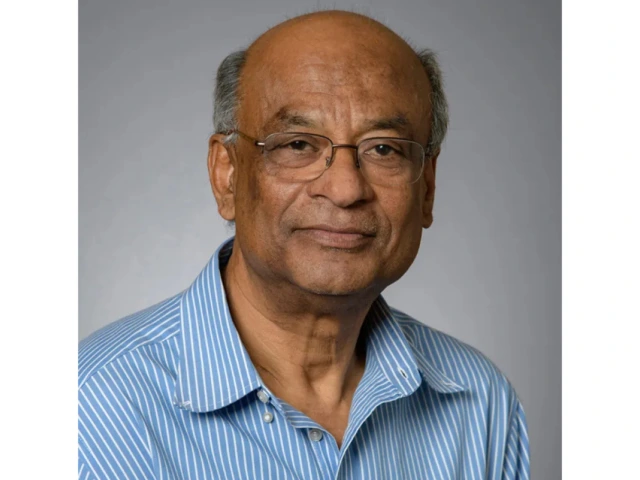
The Mazumdar group investigates the electronic, optical, and collective properties of strongly correlated quasi-one- and two-dimensional materials, where electron-electron interactions lead to emergent behavior beyond conventional band theory. The group has studied a wide range of systems, including π-conjugated polymers, single-walled carbon nanotubes, organic charge-transfer solids, and layered transition-metal compounds. Research topics include broken-symmetry states, unconventional superconductivity, and the optical properties of carbon-based semiconductors relevant to renewable energy applications. Mazumdar’s work is highly cited and has had a broad international impact, and he is an APS Fellow and a recipient of the University of Arizona’s Koffler Award for Research, Scholarship, and Creativity. His group has trained numerous PhD students and postdoctoral researchers who have gone on to academic and national laboratory careers worldwide.
The Stafford group studies the dynamics and thermodynamics of driven and open quantum systems, bridging condensed matter physics, nanoscale transport, and quantum information science. Past and current research topics include quantum transport in mesoscopic systems, the stability of metal nanowires, quantum thermoelectricity, quantum thermometry, and condensed-matter analogues of black hole physics. Recent work focuses on quantum thermodynamics, including nonlocal effects in quantum work and entropy flow in driven systems. Stafford’s research has resulted in a substantial body of highly cited publications, multiple U.S. patents for quantum and nanoscale devices, and strong student mentorship at both the undergraduate and graduate levels. His contributions have been recognized with international research and university-level teaching awards.
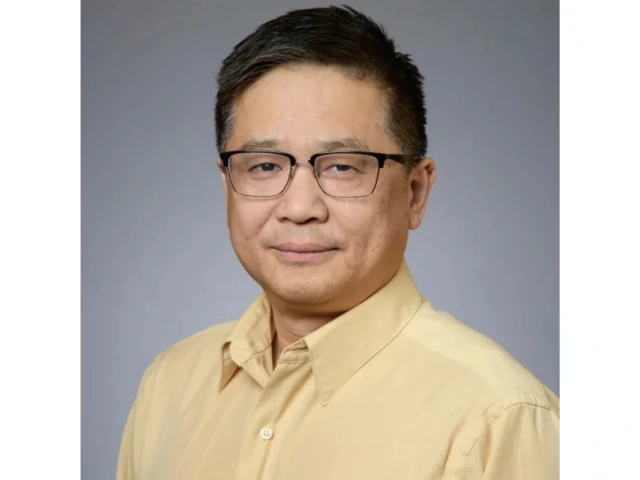
The Zhang group conducts theoretical research on magnetic and transport phenomena in quantum materials, with a particular emphasis on spin-dependent effects and spintronics. Over the past two decades, the group has developed influential theoretical frameworks for current-driven domain-wall motion, spin–orbit torques, the spin Hall effect, and magnon-mediated spin transport, helping to define core concepts in modern spintronics. More recent efforts extend these approaches into fully quantum-mechanical descriptions, with a focus on two-dimensional magnetic materials and emergent spin transport phenomena. Zhang’s work is widely cited and has had significant impact on both fundamental physics and low-power spin-based device concepts. He is an APS Fellow and a recipient of the University of Arizona’s Koffler Award for Research, Scholarship, and Creativity and Galileo Fellowship.

Associated Faculty
Joint Faculty - Rolf Binder, Oliver Monti, Arvinder Sandhu, Hao Xin
Emeritus - Thomas Kennedy