Our group is concerned with a wide variety of astrophysical and cosmological phenomena and their connection to outstanding problems in fundamental physics. As such, our interests stretch from the earliest moments after the Big Bang all the way through to the present-day universe and beyond, spanning the widest possible range of energies, distances, densities, pressures, and temperatures. Our research receives input from nearly every field of modern physics and spans the gamut from abstract theoretical considerations all the way to detailed modeling and analysis of observational data.
Members of our group are active in observational probes of dark energy, dark matter model building and observation, compact objects (black holes and neutron stars) and their environments, tests of general relativity, neutron stars as probes of dark matter, strong-field gravity and sources of gravitational radiation, primordial quark-gluon plasma and connections with cosmic evolution, and neutrino astrophysics and cosmology. We benefit from close association with the astronomy and planetary science departments, as well as with the Theoretical Astrophysics Program, and the Arizona Cosmology Lab.
Astrophysics, Cosmology and Gravitation Faculty
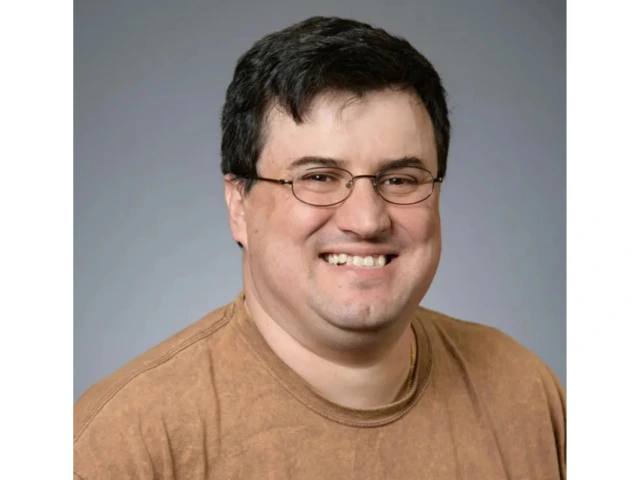
The Gralla group investigates theoretical general relativity with application in astrophysics and fundamental physics. Recent highlights include new observational predictions for future space-based very-long baseline interferometry missions aimed at measuring extreme gravitational lensing (the black hole "photon ring"), a new framework for understanding scattering theory in general relativity, and fundamental results (e.g. pair production and decoherence) for quantum field theory in the presence of strong external gravitational or electromagnetic fields. Gralla's research has been recognized with various national and international awards, including the NSF CAREER award (2018) and an APS fellowship (2025).
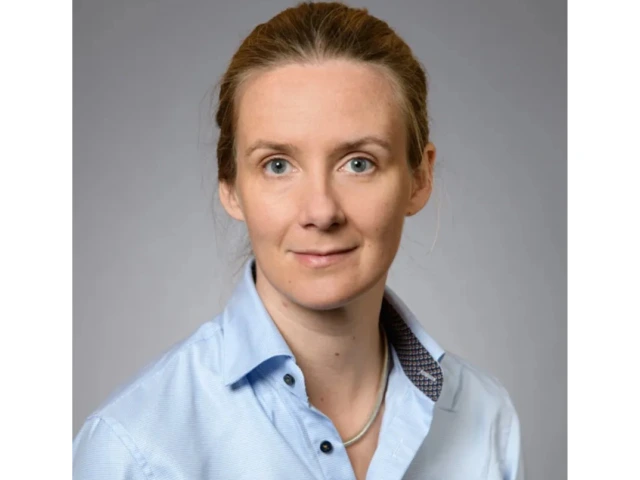
The Krause group develops new analysis concepts to constrain the properties of Dark Energy and Dark Matter using large cosmological data sets. Highlights during this APR period were the Dark Energy Survey Year 3 Cosmology constraints (for which Krause served as Science Co-Chair of the collaboration), published in 2022. Krause and her group also led a community-wide blind mock data challenge demonstrating the maturity of novel analysis techniques beyond the traditional power spectrum. Krause's research program was recognized with a DOE Early Career Award (2019), Packard Fellowship (2020) and Sloan Fellowship (2021), and multiple other honors including the APS Maria Goeppert Mayer award.
The Melia group focuses on theoretical astrophysics and cosmology, with an emphasis on supermassive black holes and the foundations of cosmological models. The group played a central role in developing the idea of imaging the shadows of objects at the centers of nearby galaxies, giving birth to the Event Horizon Telescope (EHT). During this APR period, this group has also made significant breakthroughs in theoretical cosmology, establishing several indispensable properties of models based on the standard FLRW metric, including the energy conditions and zero active mass constraint from general relativity, which have led to a resolution of long-standing problems and paradoxes in the standard model. Melia’s work has been recognized by numerous national and international awards, including the Sloan Fellowship and NSF CAREER Award, and his students have received multiple prestigious NSF and NASA fellowships and gone on to high-profile academic careers.
The Rozo group conducts research in observational cosmology, with an emphasis on large-scale structure and precision inference. The group leads three complementary research programs: using galaxy clusters as cosmological probes, developing a field-based inference approach to cosmic shear and constructing a novel dynamical halo model for modeling large-scale-structure. Key achievements include a novel simulation-based inference approach to cluster-cosmology, yielding the tightest cosmological constraints from optical cluster samples to date, the production of the highest quality mass-maps from weak lensing surrey data to date, and the development of a halo model that achieves percent-level accuracy in describing large-scale structure. Rozo’s work has been recognized by a DOE Early Career award, a Sloan Fellowship, and a Cottrell Scholar Award.

Here’s a picture of the distribution of matter in the southern galactic sky as inferred from weak lensing observations from the Dark Energy Survey based on work done within Prof. Rozo’s group.

Sam Gralla
Professor of Physics

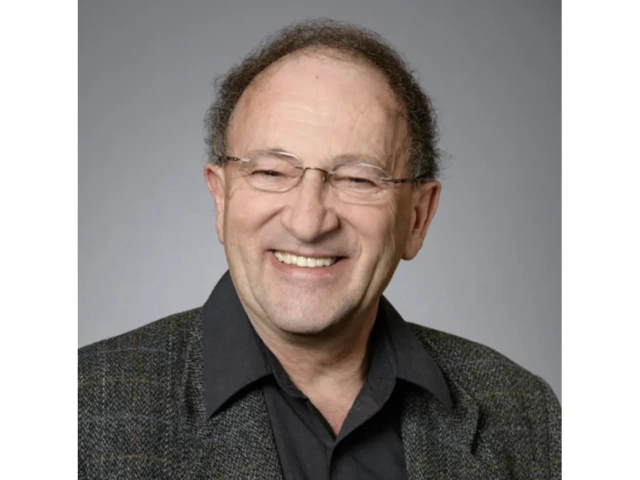
Fulvio Melia
Professor of PhysicsProfessor of Applied Mathematics
Professor of Astronomy