University President and College of Science Dean Visit Physics Department

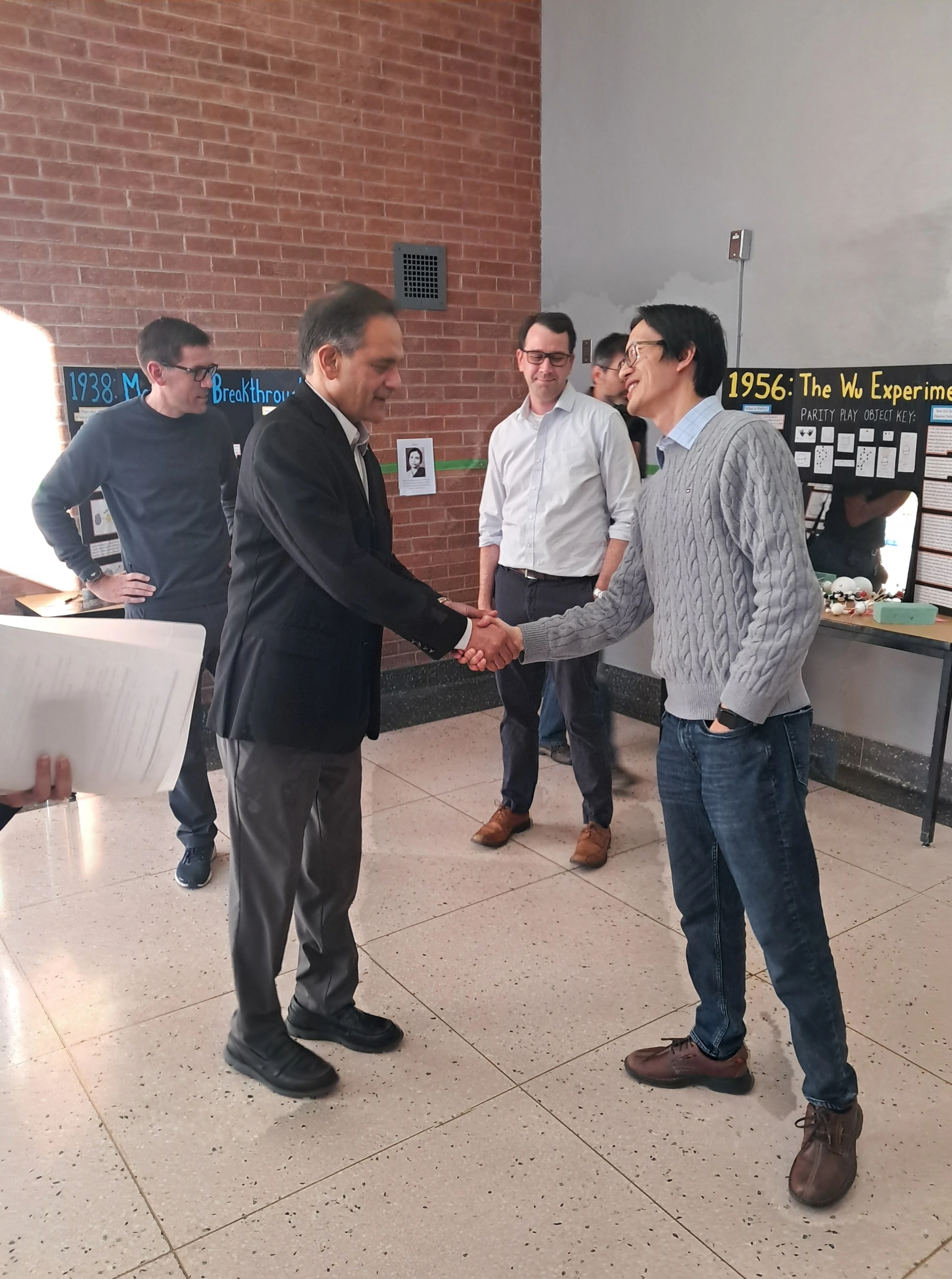
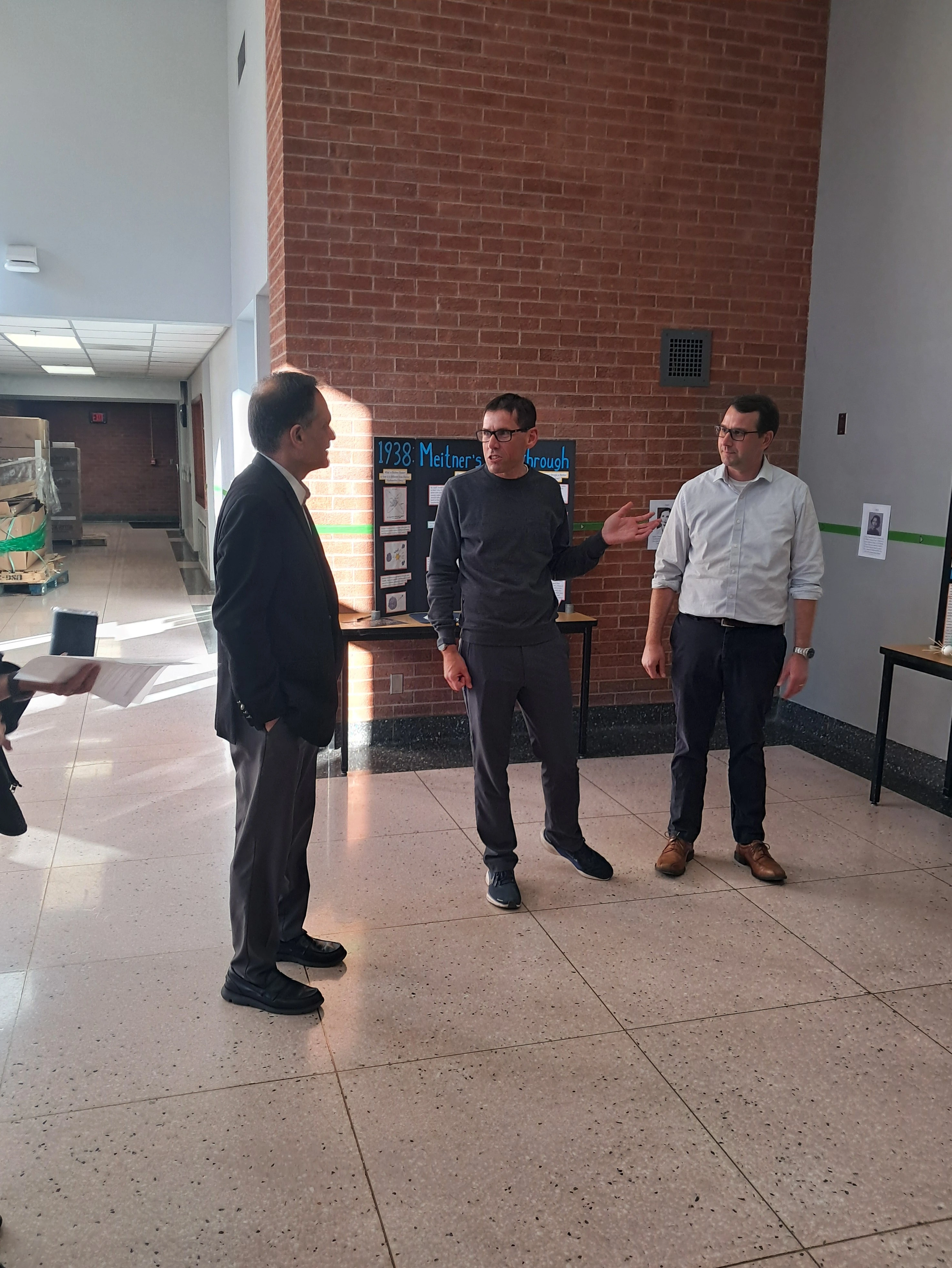
On December 8, 2025, University President Suresh Garimella and Carmie Garzione the Dean of the College of Science at the University of Arizona, toured the Department of Physics as part of their visit to the College of Science. The tour, led by Physics Associate Department Head and Professor of Physics Brian LeRoy, showcased cutting-edge research and student success initiatives.
Highlights of the visit included:
Nanoscale Quantum Science Lab: During the visit, Associate Professor of Physics, John Schaibley and Professor LeRoy explained how they fabricate and study quantum devices based on nanoscale materials. They use a combination of low-temperature microscopy techniques to study and control the quantum states of electrons in these devices. These devices have the potential to be used in next-generation quantum computers and ultra-bright quantum light sources. (Schaibley lab) (LeRoy lab)
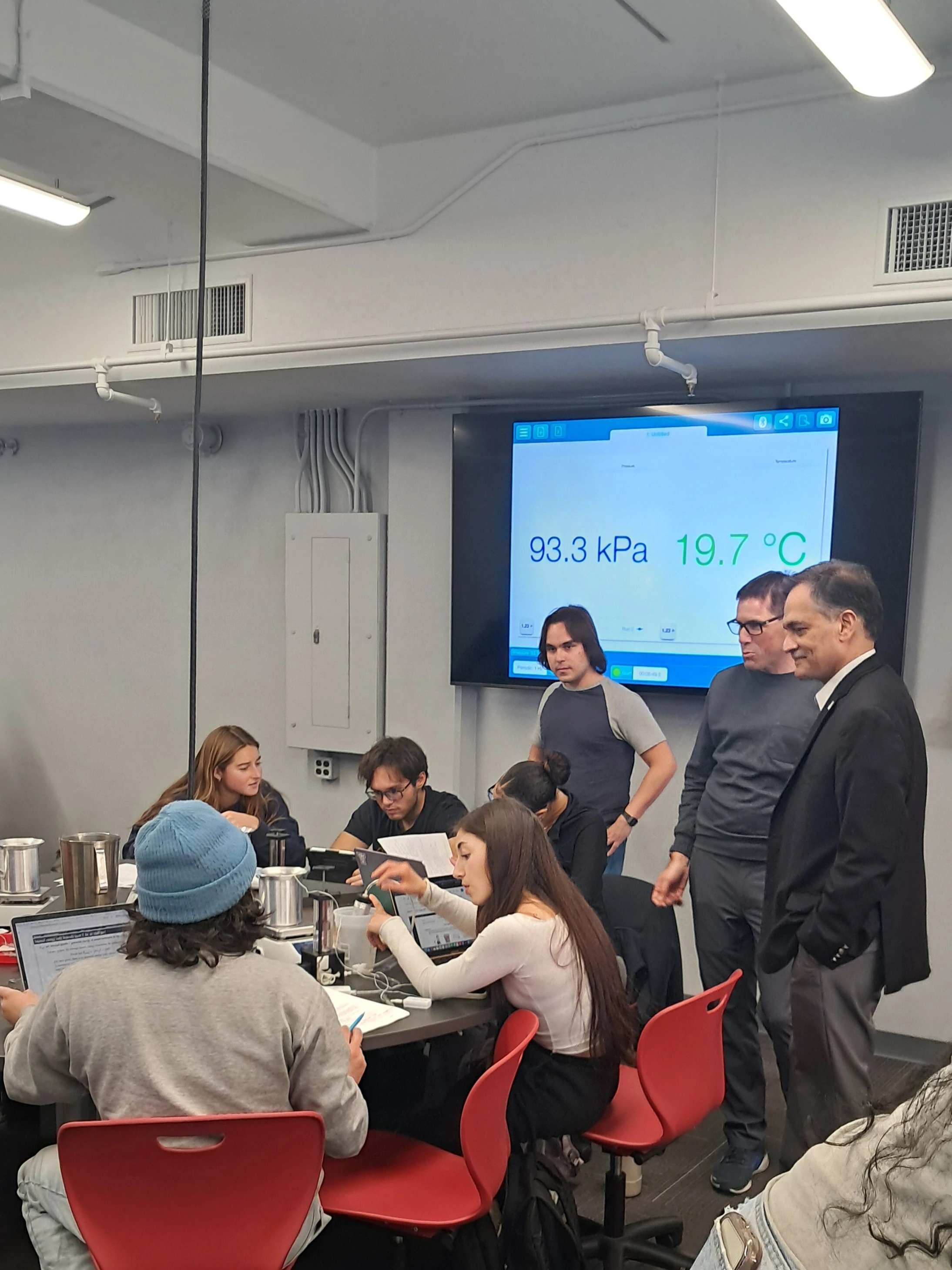
Introductory Physics Studio Classroom: President Garimella and Dean Garzione stopped by the first-semester introductory physics classroom which has been transformed due to Provost Investment Funding to provide students with an integrated studio experience combining hands-on laboratory and discussion activities. Now in its second semester, this format has seen significantly improved student engagement and performance. The course has proven very popular with a more than 20% increase in enrollment as the department prepares to fully roll out the second semester version starting in the Spring.
FASTLab (Future Advanced Semiconductor Technology Lab): President Garimella and Dean Garzione toured the FASTLab, learning from Professor of Physics, Weigang Wang about the Physics Department’s new Master’s program in semiconductor technology and the initiative to train Arizona’s rapidly growing semiconductor workforce. As part of the Center for Semiconductor Manufacturing (CSM) effort, the FASTLab enables students to practice essential semiconductor fabrication and characterization techniques in a non-cleanroom environment, dramatically increasing training throughput compared with traditional cleanroom facilities. President Garimella expressed strong interest in the new Semiconductor Master’s Program and asked about the types of thin films and lithography methods the lab will support. With full operations expected in 2026, he said he looks forward to seeing students actively engaged in hands-on semiconductor training in this state-of-the-art facility.
The visit underscored the department’s commitment to pioneering research and fostering student achievement within the College of Science.